HIST23 Glimpse Talk 2026

0 of 0

Click here to enter exhibit

Step 0 of 0


1

Maps: Past, Present & Future

2

How...
How...

3

A Rainy & Miserable Night DUPLICATED

4

A Happy Camper DUPLICATED

5

Rob Kent
Rob Kent

6

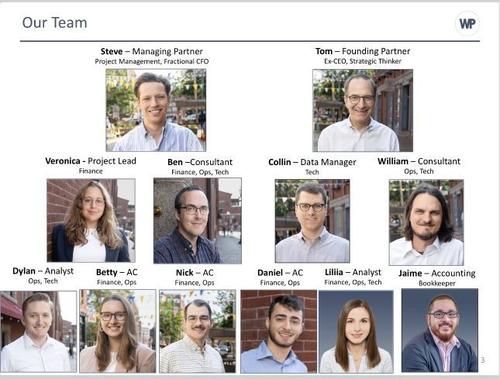
Webster Pacific Team

7

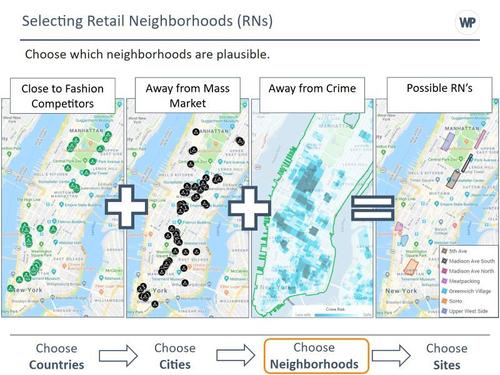
What We Do at WP
What We Do at WP

8

Example of Our Work
Example of Our Work

9

Discovered Antique Maps DUPLICATED

10

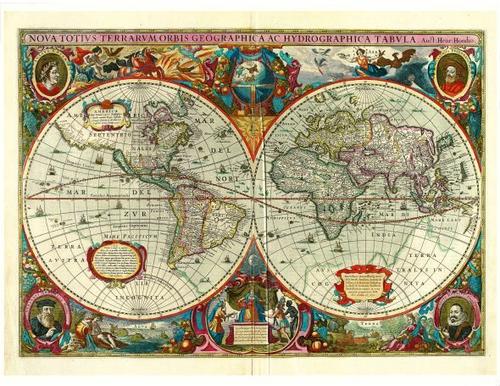
Hendrik Hondius - 1630 DUPLICATED

11

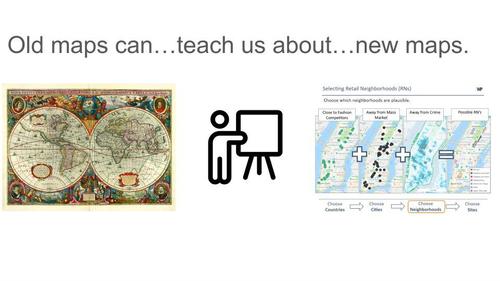
Old Maps Can Teach Us About New Maps

12

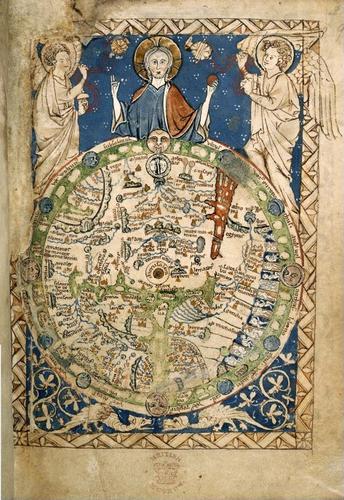
Psalter Map - artist unknown - 1265 DUPLICATED

13

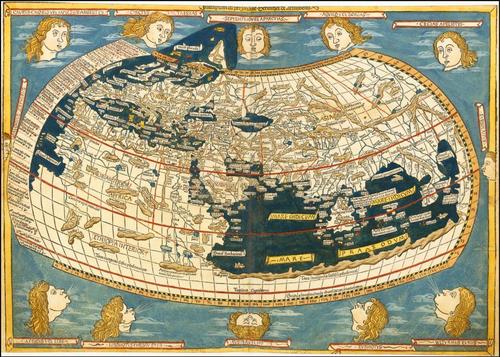
Ulm Ptolemy - 1482 DUPLICATED

14

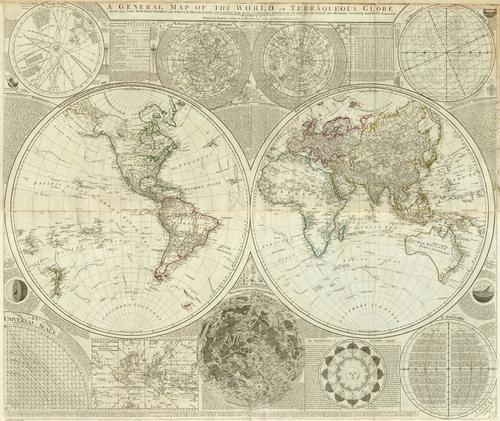
The World - Samuel Dunn - 1787 DUPLICATED

15

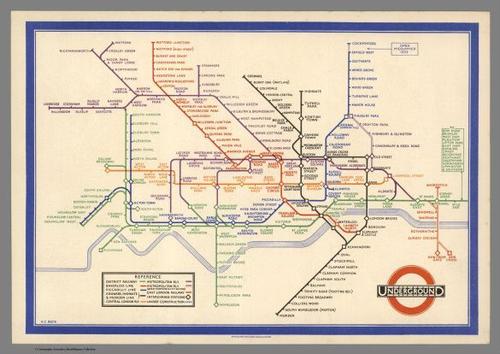
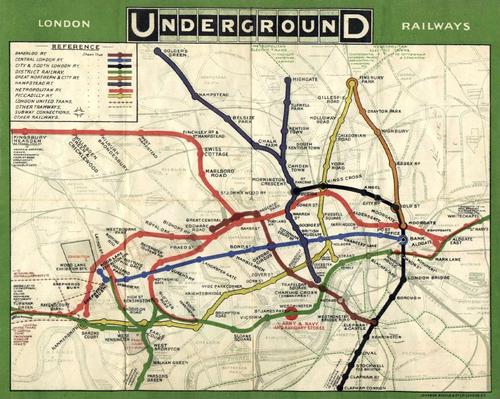
London Underground - 1933 - Harry BeckDUPLICATED

16

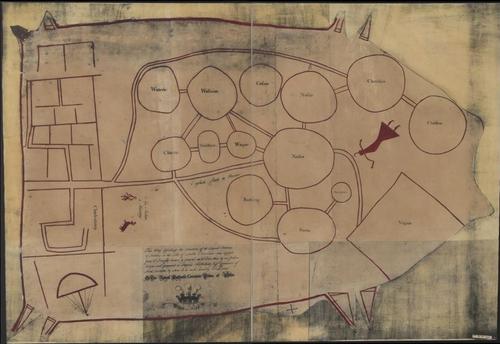
South Carolina Deerskin Map, 1721, Library of Congress Copy.DUPLICATED

17

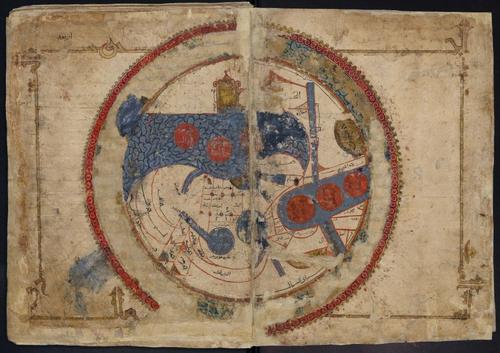
Classic KMMS world map, “Ṣūrat al-Arḍ” (Picture of the World) - 1193DUPLICATED

18

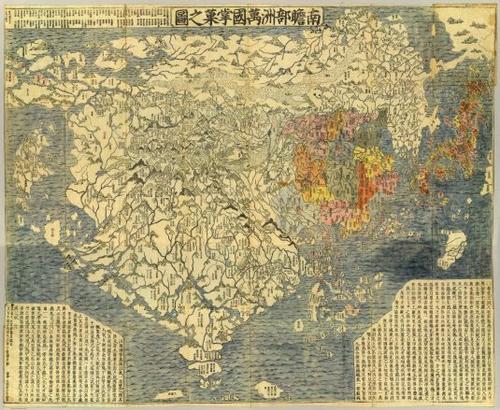
First Japanese Buddhist Map of the World Showing Europe, America, and Africa - Nansenbushu-rokashihotan - 1710 

19

 Japanese Buddhist world map, titled Nansenbushu Bankoku Shoka No Zu - 1710
 Japanese Buddhist world map, titled Nansenbushu Bankoku Shoka No Zu - 1710

20

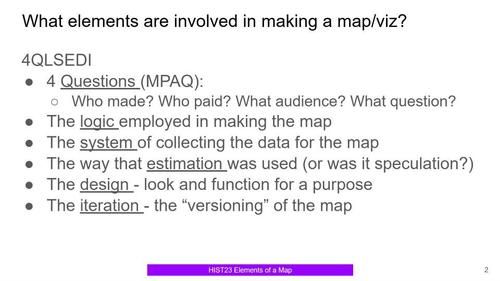
4QLSEDI
4QLSEDI

21

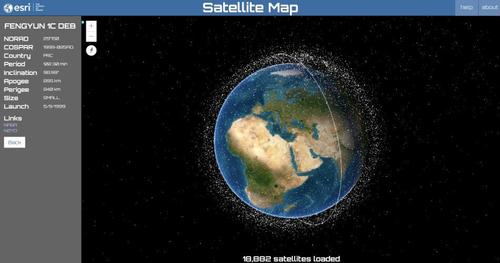
Satellite Map - Jeff Sousa

22

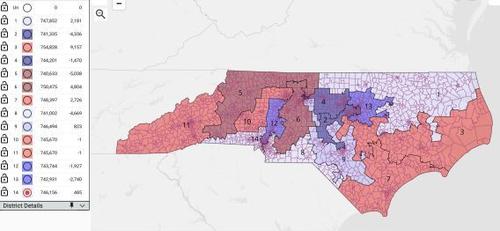
North Carolina Redistricted

23

E316 - Map of the Universe -  (Cam Maguire)DUPLICATED

24

E316 - FATMAP (Sam Wexler)DUPLICATED

25

NYC Field Trip - On Subway

26

NYC Field Trip - NYPL

27

Special Collections - January 2025 - #1

28

Special Collections - January 2024 - #1

29

NYC Field Trip - BKREA

30

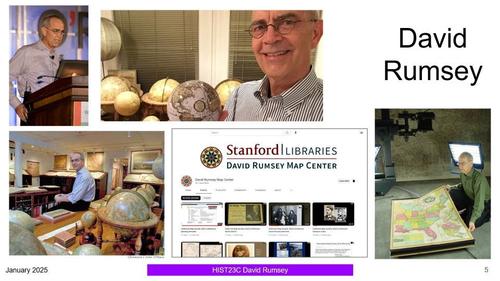
David Rumsey
David Rumsey

31

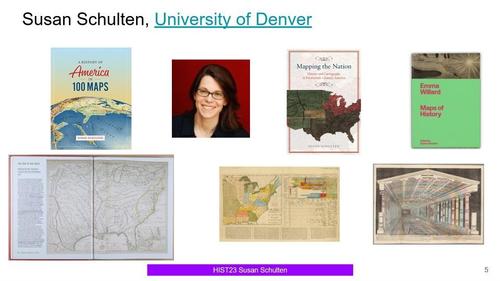
Susan Schulten
Susan Schulten

32

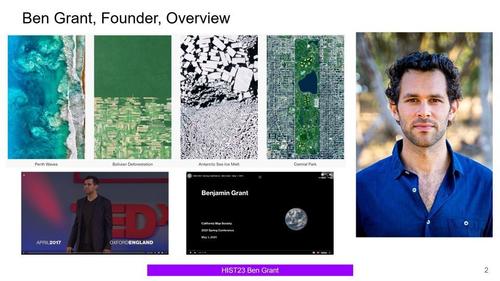
Ben Grant
Ben Grant

33

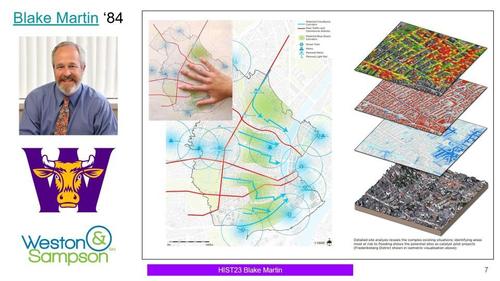
Blake Martin
Blake Martin

34

Student Maps - Old Map

35

Student Maps - New Map

36

Student Having Coffee With Tom

37

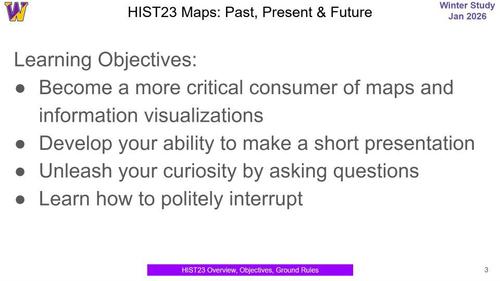
Learning Objectives
Learning Objectives

38

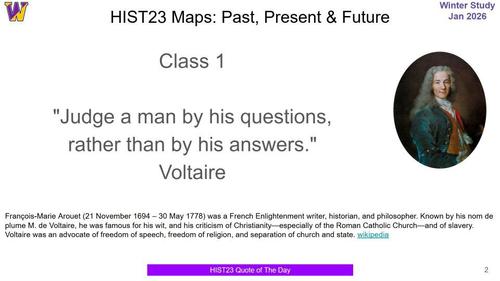
Voltaire
Voltaire

39

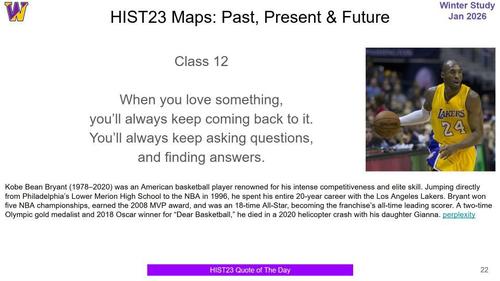
Kobe
Kobe

40

Thank you!
Thank you!

Maps: Past, Present & Future

Image 1 of 40 | e787 | i42282 | 1920x1080px
Maps: Past, Present & Future

[ 2026-01-10 20:40:55 ]

0

How...

Image 2 of 40 | e787 | i42220 | 1024x1024px
How...

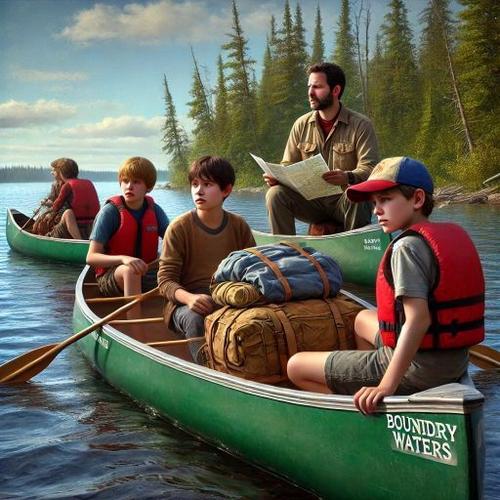
It all began when I was about 12 years old, on a canoe trip in Northern Minnesota, with four other boys my age and a counselor about 18, who didn't know how to read a map and got our group horribly lost.

0

A Rainy & Miserable Night

DUPLICATED
Image 3 of 40 | e787 | i42221 | 1024x1024px
A Rainy & Miserable Night DUPLICATED

We spent a miserable night in a downpour, under our canoes, on wet and muddy ground. And I resolved that night that I would always the be the navigator and that I would never get lost again.

source: DALL-E

0

A Happy Camper

DUPLICATED
Image 4 of 40 | e787 | i42222 | 1024x1024px
A Happy Camper DUPLICATED

Thus began my journey and love affair with maps. I was the navigator on all of my subsequent canoe trips.

0

Rob Kent

Image 5 of 40 | e787 | i42230 | 750x500px
Rob Kent

[ 2026-01-07 04:01:06 ]

0

Webster Pacific Team

Image 6 of 40 | e787 | i41753 | 1290x978px
Webster Pacific Team

[ 2025-12-20 08:15:36 ]

0

What We Do at WP

Image 7 of 40 | e787 | i41754 | 1290x968px
What We Do at WP

[ 2025-12-20 08:15:58 ]

0

Example of Our Work

Image 8 of 40 | e787 | i42231 | 1600x1200px
Example of Our Work

[ 2026-01-07 04:19:04 ]

0

Discovered Antique Maps

DUPLICATED
Image 9 of 40 | e787 | i42228 | 4032x3024px
Discovered Antique Maps DUPLICATED

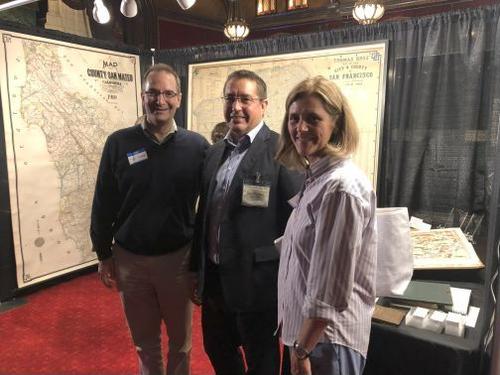
About ten years ago, I discovered the world of antique maps.

0

Hendrik Hondius - 1630

DUPLICATED
Image 10 of 40 | e787 | i42229 | 9449x7293px
Hendrik Hondius - 1630 DUPLICATED

Antique maps are like supercharged nuggets of information. 


Hendrik Hondius - 1630

One of my all-time favorite maps, by Hendrik Hondius, in 1630, during the Dutch Golden Age, when the world was not yet fully discovered and the conventional wisdom was that California was an island. It’s a map, and a piece of art and a statement about the importance of science in a world that had previously been dominated by religion and tradition. 

raremaps.com (Barry Ruderman) 

1636 Henricus Hondius

[English Edition!] Nova Totius Terrarum Orbis Geographica Ac Hydrographica Tabula

Hendrik Hondius (1573 - 1650) was a Dutch Golden Age engraver, cartographer and publisher. This wonderful and very detailed map was first published around 1630, in his famous atlas Atlantis Maioris. It was the first dated map published in an atlas, and therefore the first widely available map, to show any part of Australia. The map is within decorative border, with portraits of Julius Caesar, Ptolomey, Gerhard Mercator and Jodocus Hondius and tableaus depicting the 4 elements - Earth, Air, Fire and Water. Terra Incognita Maps

Nova Totius Terrarum Orbis Geographica ac Hydrographica Tabula is a map of the world created by Hendrik Hondius in 1630, and published the following year at Amsterdam, in the atlas Atlantis Maioris Appendix. Illustrations of the four elements of fire, air, water, and land are included. In the four corners, there are portraits of Julius Caesar, Claudius Ptolemy, and the atlas's first two publishers, Gerard Mercator and Jodocus Hondius, the father of Hendrik.[39] Among its claims to notability is the fact that it was the first dated map published in an atlas, and therefore the first widely available map, to show any part of Australia, the only previous map to do so being Hessel Gerritsz' 1627 Caert van't Landt van d'Eendracht ("Chart of the Land of Eendracht"), which was not widely distributed or recognised. The Australian coastline shown is part of the west coast of Cape York Peninsula, discovered by Jan Carstensz in 1623. Curiously, the map does not show the west coast features shown in Gerritsz' Caert.  Wikipedia

https://collections.leventhalmap.org/search/common...


0

Old Maps Can Teach Us About New Maps

Image 11 of 40 | e787 | i42232 | 1920x1080px
Old Maps Can Teach Us About New Maps

Source: Google Slide

[ 2026-01-07 04:26:16 ]

0

Psalter Map - artist unknown - 1265

DUPLICATED
Image 12 of 40 | e787 | i42233 | 3791x5496px
Psalter Map - artist unknown - 1265 DUPLICATED

Or, "What kind of map is this?" And you find it is a mappa mundi from the 13th century, depicting items of faith and place. You can see Jesus, Adam and Eve and the Garden of Eden, as well as Jerusalem and the Red Sea.


i38686


source: myoldmaps


perplexity

From the late 13th century, this is the Psalter Map, because it was found a Psalter, which is book of psalms. This map is called a mappa mundi, which historian Felicitas Schmieder refers to as "Geographies of Salvation" as they report the narrative of Christ's interaction with our world. The map includes Jerusalem, the Garden of Eden, the Red Sea, the Dead Sea, Gog and Magog, as well as a section of monstrous races.

The Psalter Map is a one of the most famous examples of a midieval mappa mundi. It was likely part of a psalm or prayer book. I love it because it is only marginally geographic and instead speaks to symbols of faith and fear. It has Jerusalem in the center and the Garden of Eden. It also a section on the right of fantastic beasts from other lands. 

“The Psalter map is an English map from the thirteenth century that includes much information within it's small area Like many medieval maps, this world map subjectively presents Jerusalem, as enlarged and at the center, as Jesus overlooks the world. The map also contains many indicators of the materiality of the Middle Ages, including buildings, boats, "monstrous" human races (along the right-hand side) and the wind. Thus, the map acts as a record of how people experienced the world during this time period.” History Fine Prints (on etsy)

“Psalter World Map is the name historiography gave to a medieval world map that has been found in a psalter. This mappa mundi is now conserved at the British Library in London. The small map (c. 9.5 cm or 3.7 in high) shows a lot of detail. It was written around 1260; the author is unknown. According to historian Anna-Dorothee von den Brincken, it looks like a small version of the Ebstorf Map from Northern Germany. It is a typical mappa mundi that does not only show the geographical and historical knowledge, but also puts it into the frame of salvation history. Jesus Christ appears in the East (i.e. "above"), as the maps of Christian Middle Ages have East above, not North, giving a blessing with his right hand.” wikipedia

“A psalter is a volume containing the Book of Psalms, often with other devotional material bound in as well, such as a liturgical calendar and litany of the Saints. Until the later medieval emergence of the book of hours, psalters were the books most widely owned by wealthy lay persons and were commonly used for learning to read. Many Psalters were richly illuminated and they include some of the most spectacular surviving examples of medieval book art.” wikipedia

http://sims.digitalmappa.org/workspace/#965fe731
 

https://en.wikipedia.org/wiki/Psalter_world_map
 

0

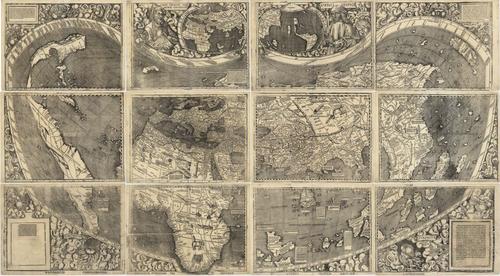
Ulm Ptolemy - 1482

DUPLICATED
Image 13 of 40 | e787 | i42234 | 27077x19358px
Ulm Ptolemy - 1482 DUPLICATED

Wikipedia | raremaps.com | perplexity

One of my favorite maps of all time, the story of this map is the story of Western civilization, which owes a debt to Islam. Ptolemy, in the 2nd century AD, knew and wrote about Europe, Africa and Asia, in a book called Geographia, which included the first system of longitude and latitude, as well as about 8,000 lat-long coordinates for cities. When the Roman Empire fell in the 5th century, Ptolemy’s book made its way to Bagdad and, during the Islamic Golden Age, from roughly 750 to 1250, this book was translated from Latin into Arabic. With the fall of Bagdad and the awakening of the Renaissance, this book made its way to Europe and, in 1482, Ptolemy’s book and this map were created and published in Ulm.


Write a 200-word summary of the map titled the Ulm Ptoley world map of 1482.

The Ulm Ptolemy world map of 1482 is a landmark in cartographic history, notable for being the first printed world map produced north of the Alps and the first to appear in color, with the seas rendered in a vibrant blue. Published by Lienhart Holle in Ulm, this map was based on the manuscript work of Donnus Nicolaus Germanus and engraved by Johannes Schnitzer of Armsheim, whose signature appears on the map—the earliest known example of a signed world map engraving16.

The map follows the Ptolemaic tradition but incorporates some contemporary updates, such as detailed depictions of Scandinavia and Greenland, reflecting the latest geographical knowledge of the time456. However, it omits Portuguese discoveries along the African coast and retains a closed Indian Ocean, linking Asia and Africa with a speculative southern continent12. Surrounding the map are twelve wind heads, each named, adding decorative and symbolic elements16.

Printed from woodblocks rather than copperplates, the map is visually distinctive, with bold, sturdy lines and rich coloring. The Ulm edition also introduced four new regional maps to the atlas, marking a significant evolution from earlier Italian editions. The 1482 Ulm Ptolemy remains highly prized for its artistic quality and historical significance456.

  1. https://www.raremaps.com/gallery/detail/14277/untitled-map-of-the-world-1482-ulm-ptolemy-world-map-ptolemy-holle
  2. https://www.raremaps.com/gallery/detail/8154/untitled-map-of-the-world-1486-ulm-ptolemy-world-map-ptolemy-holle
  3. https://www.raremaps.com/essay/5/the-ulm-ptolemy-of-1482-and-1486
  4. https://gallery.lib.umn.edu/exhibits/show/ptolemy-s-world/tour-of-maps/1482---ulm
  5. https://apps.lib.umn.edu/bell/map/PTO/TOUR/1482u.html
  6. https://www.christies.com/en/lot/lot-5780582
  7. https://collections.lib.uwm.edu/digital/collection/agdm/id/23096/
  8. https://demo.mediainfo.com/item/230
  9. https://www.cabinet.ox.ac.uk/ptolemy-world-map-1482-0
  10. https://www.geographicus.com/P/AntiqueMap/egypt-ptolemy-14

How did Geography by Ptolemy from classical times until the renaissance?

Ptolemy’s Geography (or Geographia) was a transformative work that shaped the understanding and representation of the world from classical antiquity through the Renaissance. Written around 150 AD, it introduced a systematic approach to mapping the world, using mathematical principles and a coordinate system of latitude and longitude based on a prime meridian at the "Fortunate Isles" (Canary Islands)15. Ptolemy’s work synthesized earlier geographic knowledge, notably refining the methods of Marinus of Tyre, and included detailed instructions for mapmaking, a gazetteer with coordinates for thousands of locations, and regional as well as world maps15.

After flourishing in the Roman and Byzantine worlds, Geography faded in Western Europe during the early Middle Ages, as religiously symbolic maps (like T-O maps) dominated5. However, the text was preserved and expanded upon by Islamic scholars, who translated and commented on it, keeping its scientific legacy alive5. The Renaissance saw a revival: Byzantine scholars reintroduced the text to Western Europe, leading to a Latin translation in 1406 by Jacopo d’Angelo15. Printed editions with reconstructed maps appeared from 1477 onward, revolutionizing European cartography by emphasizing empirical observation and mathematical accuracy over medieval symbolism145. Ptolemy’s methods influenced explorers, mapmakers, and the broader development of geographic science well into the modern era35.

  1. https://en.wikipedia.org/wiki/Geography_(Ptolemy)
  2. https://digitalmapsoftheancientworld.com/ancient-maps/ptolemys-map/
  3. https://press.uchicago.edu/ucp/books/book/distributed/P/bo56698759.html
  4. https://www.folger.edu/explore/collection-highlights/ptolemy-edition-of-1513/
  5. https://www.mixplaces.com/ptolemys-geography
  6. https://www.thoughtco.com/ptolemy-biography-1435025
  7. https://www.britannica.com/biography/Ptolemy
  8. https://library.fiveable.me/key-terms/hs-california-history/ptolemys-geography
  9. https://www.nypl.org/events/exhibitions/galleries/explorations/item/5384
  10. https://sterncenter.library.jhu.edu/early-book-collections/ptolemys-geography-in-the-renaissance/

[ 2025-06-01 18:46:28 ]

1

The World - Samuel Dunn - 1787

DUPLICATED
Image 14 of 40 | e787 | i42235 | 7599x6395px
The World - Samuel Dunn - 1787 DUPLICATED

Perplexity


E198 - Northwest Passage, Arctic & North America - 1259i5086
i5086


The “River of the West” was a legendary waterway depicted on many 17th- and 18th-century maps of North America, reflecting European hopes for a transcontinental passage from the interior to the Pacific Ocean. Inspired by explorers’ tales and fueled by myths like Admiral de Fonte’s supposed voyage, cartographers drew the river as a possible route for trade and the elusive Northwest Passage12. The river’s imagined course linked the Rocky Mountains to the Pacific, sometimes connecting with the Missouri or Great Lakes. As scientific exploration increased in the late 18th century, notably after Captain Cook’s surveys, the river vanished from maps, replaced by accurate geography34.

  1. https://commons.wikimedia.org/wiki/File:1762_Janvier_Map_of_North_America_(Sea_of_the_West)_-_Geographicus_-_NorthAmerica-janvier-1762.jpg
  2. https://www.raremaps.com/gallery/detail/53827/north-america-as-divided-amongst-the-european-powers-dunn
  3. https://www.oregonhistoryproject.org/articles/historical-records/an-accurate-map-of-north-america-c-1780/
  4. https://www.historylink.org/File/7611
  5. https://blogs.loc.gov/maps/2020/06/18th-century-maps-of-north-america/
  6. https://en.wikipedia.org/wiki/History_of_cartography
  7. https://dcc.newberry.org/?p=14413
  8. https://www.geographicus.com/P/AntiqueMap/northamerica-wilkinson-1794
  9. https://www.nypl.org/blog/2018/05/15/united-states-pre-1900-map-collection
  10. https://www.csmonitor.com/Books/2023/1221/The-river-expedition-that-opened-the-American-West


    “An impressive, monumental size double hemisphere world map by Dunn. The world map is full of detail, including topography, settlements, Indian tribes in America, etc. There are 15 insets, including celestial charts (both Northern and Southern Hemisphere), the Solar System, a selenographic map of the moon’s surface as well a smaller world map on Mercator’s projection. This version also shows Captain Cook’s and other explorer’s tracks and voyages. Dunn's decorative double hemisphere map of the World, embellished with a number of different Celestial Models, which has been revised to include the discoveries of Captain Cook on his 3 voyages. There is plentiful of descriptive text throughout the map. This is the first edition of the map, published by Robert Sayer.” Liveauctioneers.com

davidrumsey.com

liveauctioneers.com

0

London Underground - 1933 - Harry Beck

DUPLICATED

Image 15 of 40 | e787 | i42237 | 4684x3316px
London Underground - 1933 - Harry BeckDUPLICATED

This is the revolutionary design made by Harry Beck, an electrical engineer, in 1933. It strips out geographical accuracy in favor of what really matters: "Where is the next stop?"

David Rumsey

0

South Carolina Deerskin Map, 1721, Library of Congress Copy.

DUPLICATED

Image 16 of 40 | e787 | i42238 | 3539x2433px
South Carolina Deerskin Map, 1721, Library of Congress Copy.DUPLICATED

The description for this map reads: “This map describing the situation of the Several Nations of Indians to the NW of South Carolina was copyed from a Draught drawn & painted on a Deer skin by an Indian Cacique and presented to Francis Nicholson Esq. Governour of South Carolina by whom it is most humbly Dedicated To His Royal Highness George Prince of Wales.”

Oriented with the Atlantic coast on the left and the bottom, this map depicts 13 Carolina Indian communities and the English colonies of Virginia and Charleston, South Carolina, as well as the relationships between them.

Earlier historians, namely Gregory A. Waselkov and Mark Warhus, have attributed this map to the Catawba Indians. However, in 2013, Professor Ian Chambers, then at the University of Idaho, made the case for a Cherokee origin. This exhibit follows Chambers' interpretation.

The map shown here is actually the Library of Congress' copy of an "original" copy stored in the British Library (next image).

Image from https://www.loc.gov/item/2005625337/.

Sources for this map:

Susan Schulten, A History of America in 100 Maps (University of Chicago Press, 2018), pp. 72-73, https://doi.org/10.7208/chicago/9780226458755.001.0001.

G. Malcolm Lewis, "Maps, Mapmaking, and Map Use by Native Americans,"  in David Woodward and G. Malcolm Lewis, eds. The History of Cartography, vol. 2, book 3: Cartography in the Traditional African, American, Arctic, Australian, and Pacific Societies (Chicago: University of Chicago Press, 1998), pp. 99-100, 173. https://press.uchicago.edu/books/HOC/HOC_V2_B3/Volume2_Book3.html

Ian Chambers, “A Cherokee Origin for the ‘Catawba’ Deerskin Map (c.1721),” Imago Mundi 65, no. 2 (2013): 207–16. http://www.jstor.org/stable/23480779.

For more information on the stories and associations with which the Cherokee and the English made sense of one another, see:
Chambers, Ian. 2015. “The Empire Visits the Metropolis: The Red Atlantic, Spatial Habitus and the Cherokee.” Atlantic Studies 12 (1): 67–89. doi:10.1080/14788810.2014.963782. 

Thanks again to Professor Susan Schulten for directing me to research on this map.

0

Classic KMMS world map, “Ṣūrat al-Arḍ” (Picture of the World) - 1193

DUPLICATED

Image 17 of 40 | e787 | i42239 | 7433x5253px
Classic KMMS world map, “Ṣūrat al-Arḍ” (Picture of the World) - 1193DUPLICATED

An amazing map of the world from 1193, created by an Islamic cartographer, based on information from roughly two centuries earlier that was also by an Islamic cartographer. The world owes a debt to Islamic world for being the center of knowledge, learning and the keeper, through the Islamic translation movement, of the flame of knowledge that had been started by the Greeks and Romans. See the schematic diagram to better understand how all the parts of the world were shown in this map. 


Classic KMMS world map, “Ṣūrat al-Arḍ” (Picture of the World), from an abbreviated copy of al-Iṣṭakhrī’s Kitāb al-masālik wa-al-mamālik (Book of Routes and Realms). Gouache and ink on paper. Diameter 37.5 cm. Cod. Or. 3101, fols. 4–5. Firmly dated through colophon to 589 AH/ 1193 CE. Location: Leiden University Libraries.  

Late Siculo-Norman product as identified by Karen Pinto on the basis of an ‘alama—stamp used in the Siculo-Norman court.


For more on this map and other world maps in the KMMS tradition, please refer to: https://press.uchicago.edu/ucp/books/book/chicago/M/bo17703325.html


1

First Japanese Buddhist Map of the World Showing Europe, America, and Africa - Nansenbushu-rokashihotan - 1710 

Image 18 of 40 | e787 | i42240 | 6000x4777px
First Japanese Buddhist Map of the World Showing Europe, America, and Africa - Nansenbushu-rokashihotan - 1710 

Wikipedia

[ 2026-01-07 12:31:05 ]

0

 Japanese Buddhist world map, titled Nansenbushu Bankoku Shoka No Zu - 1710

Image 19 of 40 | e787 | i42268 | 4284x3512px
 Japanese Buddhist world map, titled Nansenbushu Bankoku Shoka No Zu - 1710

Source: Reddit/MapPorn

[ 2026-01-08 03:40:33 ]

0

4QLSEDI

Image 20 of 40 | e787 | i42250 | 1920x1080px
4QLSEDI

[ 2026-01-07 13:06:18 ]

0

Satellite Map - Jeff Sousa

Image 21 of 40 | e787 | i42270 | 1901x998px
Satellite Map - Jeff Sousa

Source: Satellite Map | Space Map Shows 19K+ Satellites Orbiting Earth (richiecarmichael.github.io)

Description: This is an interactive Satellite Map created by Richie Carmichael, an Esri developer of 22+ years. It claims to show satellites in space by country but does not specify whether these are active satellites or whether it includes every satellite ever launched (according to available data). Carmichael actually gives very little context or background info about this map and how he created it.

Question: How many satellites are in space and where are they?

Logic: This map is an interactive 3D model of Earth. Carmichael used this model to enable the viewer to rotate the earth and zoom out wide to se all satellites in near and far orbit.

System: Carmichael gets most of his data from online opensource resources, such as NASA and N2YO. As an Esri developer, he takes this data and creates his own map.

Estimation: Carmichael clearly uses estimation in where he chooses to place each satellite on the map and how he chooses to represent the line of orbit. These factors are constantly changing in real time.

Design: I don't initially see any design-related purpose for this map, considering it doesn't specify whether these are active or historic satellites. This seems to be a fun project to test Esri capabilities.

Iteration: It seems that Carmichael started this project in about 2016 and continued to work on it until 2022. It's not clear how many data sets Carmichael had to use to make this map.

0

North Carolina Redistricted

Image 22 of 40 | e787 | i42269 | 2274x1048px
North Carolina Redistricted

2024 congressional voting outcomes

https://davesredistricting.org/maps#state::NC 

[3/31/25 - Tom Paper talked with Alec Ramsay, who has worked on this site and might be teaching a winter study class in January 2026]

2025-04-01 02:39:47i34793


0

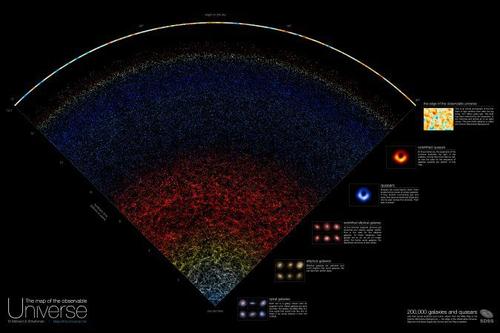
E316 - Map of the Universe -  (Cam Maguire)

DUPLICATED

Image 23 of 40 | e787 | i42271 | 10801x7200px
E316 - Map of the Universe -  (Cam Maguire)DUPLICATED

Question - Where are galaxies located in the universe in relation to the milky way? Are these galaxies red-shifted or blue-shifted?

Logic - With the Milky Way galaxy at the bottom, the map expands out into a cone shape with over 200,000 other known galaxies displayed. The map is color coded as blue galaxies are closer to us and red are farther away. 

System - Digital mapping using 15 years of data collected every night from New Mexico. 

Estimation -  None of this has been seen by human eyes so all of the locations are done using calculations so there could be some error but for the most part the positioning is very accurate. 

Design - Very precise, lots going on. Over 200,000 galaxies mapped. Some descriptions for some of the galaxies and quasars are listed. 

Iteration -  Published online - anyone can access. 

Link - https://mapoftheuniverse.net/ 

0

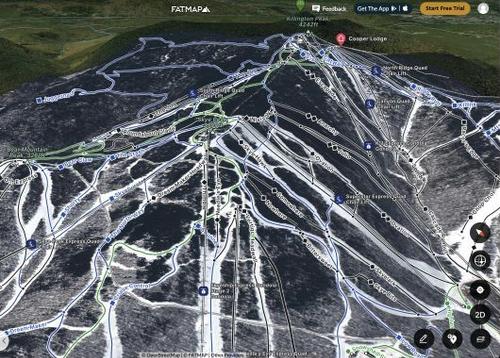
E316 - FATMAP (Sam Wexler)

DUPLICATED

Image 24 of 40 | e787 | i42275 | 2120x1522px
E316 - FATMAP (Sam Wexler)DUPLICATED

Link: https://fatmap.com/adventures/@43.6076594,-72.8002799,2333.7427296,-26.4994275,-130.563515,1105.9417052,satellite,winter (It will ask you to make an account, but it is very quick)

Q - How can I navigate and interact with natural terrain, primarily mountains?

L - A digital, 3 dimensional map of the Earth that captures the topography as closely as possible.

S - Uses open source mapping data from a variety of sources and satellite imagery. Also receives qualitative data from users on trail difficulty, characteristics, etc.

E - Trail-specific data is likely estimated using data from the map. Other estimations possibly include the general shape of the mountains and land.

D - The base map corresponds as closely as possible to how the terrain actually looks and displays the trail name in difficulty-accurate color. Essential roads and interest points are included on the map. Different map overlays use colors to visually represent the corresponding theme.

I - The map does not change from what I understand, so it is made/stored once and loaded whenever a user accesses the site. However, every time a user-created Route is added, the map must be modified and in a sense “re-made”.

0

NYC Field Trip - On Subway

Image 25 of 40 | e787 | i42253 | 5712x4284px
NYC Field Trip - On Subway

[ 2026-01-07 13:08:53 ]

0

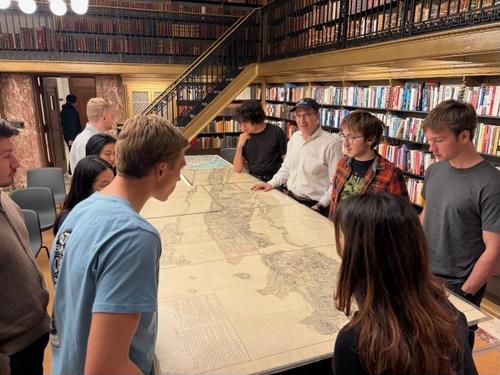
NYC Field Trip - NYPL

Image 26 of 40 | e787 | i42225 | 4284x5712px
NYC Field Trip - NYPL

[ 2026-01-06 20:53:37 ]

0

Special Collections - January 2025 - #1

Image 27 of 40 | e787 | i42245 | 4032x3024px
Special Collections - January 2025 - #1

[ 2025-01-08 17:10:15 ]

0

Special Collections - January 2024 - #1

Image 28 of 40 | e787 | i42246 | 5712x4284px
Special Collections - January 2024 - #1

[ 2024-01-11 12:26:09 ]

0

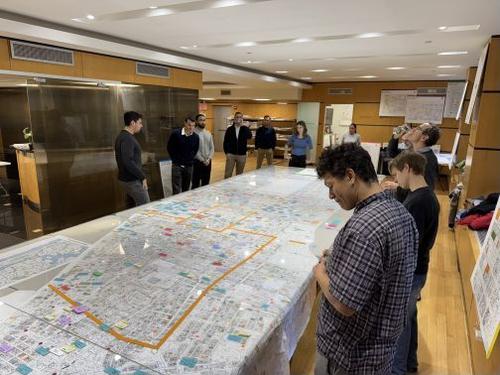
NYC Field Trip - BKREA

Image 29 of 40 | e787 | i42226 | 4032x3024px
NYC Field Trip - BKREA

[ 2026-01-06 20:55:49 ]

0

David Rumsey

Image 30 of 40 | e787 | i42241 | 1920x1080px
David Rumsey

[ 2026-01-07 12:46:21 ]

0

Susan Schulten

Image 31 of 40 | e787 | i42242 | 1920x1080px
Susan Schulten

[ 2026-01-07 12:46:53 ]

0

Ben Grant

Image 32 of 40 | e787 | i42243 | 1920x1079px
Ben Grant

[ 2026-01-07 12:47:13 ]

0

Blake Martin

Image 33 of 40 | e787 | i42244 | 1920x1080px
Blake Martin

[ 2026-01-07 12:47:52 ]

0

Student Maps - Old Map

Image 34 of 40 | e787 | i42247 | 1920x989px
Student Maps - Old Map

[ 2026-01-07 12:56:35 ]

0

Student Maps - New Map

Image 35 of 40 | e787 | i42248 | 1920x989px
Student Maps - New Map

[ 2026-01-07 12:57:05 ]

0

Student Having Coffee With Tom

Image 36 of 40 | e787 | i42272 | 810x810px
Student Having Coffee With Tom

[ 2026-01-08 04:38:02 ]

0

Learning Objectives

Image 37 of 40 | e787 | i42249 | 1920x1080px
Learning Objectives

[ 2026-01-07 13:05:56 ]

0

Voltaire

Image 38 of 40 | e787 | i42251 | 1920x1080px
Voltaire

[ 2026-01-07 13:06:36 ]

0

Kobe

Image 39 of 40 | e787 | i42252 | 1920x1080px
Kobe

[ 2026-01-07 13:06:57 ]

0

Thank you!

Image 40 of 40 | e787 | i42281 | 1920x1080px
Thank you!

[ 2026-01-10 20:34:23 ]

0

Maps: Past, Present & Future

[ 2026-01-10 20:40:55 ]

Image 1 of 40
e787
i42282
1920x1080px

How...

It all began when I was about 12 years old, on a canoe trip in Northern Minnesota, with four other boys my age and a counselor about 18, who didn't know how to read a map and got our group horribly lost.

Image 2 of 40
e787
i42220
1024x1024px

A Rainy & Miserable Night

DUPLICATED

We spent a miserable night in a downpour, under our canoes, on wet and muddy ground. And I resolved that night that I would always the be the navigator and that I would never get lost again.

source: DALL-E

Image 3 of 40
e787
i42221
1024x1024px

A Happy Camper

DUPLICATED

Thus began my journey and love affair with maps. I was the navigator on all of my subsequent canoe trips.

Image 4 of 40
e787
i42222
1024x1024px

Rob Kent

[ 2026-01-07 04:01:06 ]

Image 5 of 40
e787
i42230
750x500px

Webster Pacific Team

[ 2025-12-20 08:15:36 ]

Image 6 of 40
e787
i41753
1290x978px

What We Do at WP

[ 2025-12-20 08:15:58 ]

Image 7 of 40
e787
i41754
1290x968px

Example of Our Work

[ 2026-01-07 04:19:04 ]

Image 8 of 40
e787
i42231
1600x1200px

Discovered Antique Maps

DUPLICATED

About ten years ago, I discovered the world of antique maps.

Image 9 of 40
e787
i42228
4032x3024px

Hendrik Hondius - 1630

DUPLICATED

Antique maps are like supercharged nuggets of information. 


Hendrik Hondius - 1630

One of my all-time favorite maps, by Hendrik Hondius, in 1630, during the Dutch Golden Age, when the world was not yet fully discovered and the conventional wisdom was that California was an island. It’s a map, and a piece of art and a statement about the importance of science in a world that had previously been dominated by religion and tradition. 

raremaps.com (Barry Ruderman) 

1636 Henricus Hondius

[English Edition!] Nova Totius Terrarum Orbis Geographica Ac Hydrographica Tabula

Hendrik Hondius (1573 - 1650) was a Dutch Golden Age engraver, cartographer and publisher. This wonderful and very detailed map was first published around 1630, in his famous atlas Atlantis Maioris. It was the first dated map published in an atlas, and therefore the first widely available map, to show any part of Australia. The map is within decorative border, with portraits of Julius Caesar, Ptolomey, Gerhard Mercator and Jodocus Hondius and tableaus depicting the 4 elements - Earth, Air, Fire and Water. Terra Incognita Maps

Nova Totius Terrarum Orbis Geographica ac Hydrographica Tabula is a map of the world created by Hendrik Hondius in 1630, and published the following year at Amsterdam, in the atlas Atlantis Maioris Appendix. Illustrations of the four elements of fire, air, water, and land are included. In the four corners, there are portraits of Julius Caesar, Claudius Ptolemy, and the atlas's first two publishers, Gerard Mercator and Jodocus Hondius, the father of Hendrik.[39] Among its claims to notability is the fact that it was the first dated map published in an atlas, and therefore the first widely available map, to show any part of Australia, the only previous map to do so being Hessel Gerritsz' 1627 Caert van't Landt van d'Eendracht ("Chart of the Land of Eendracht"), which was not widely distributed or recognised. The Australian coastline shown is part of the west coast of Cape York Peninsula, discovered by Jan Carstensz in 1623. Curiously, the map does not show the west coast features shown in Gerritsz' Caert.  Wikipedia

https://collections.leventhalmap.org/search/common...


Image 10 of 40
e787
i42229
9449x7293px

Old Maps Can Teach Us About New Maps

Source: Google Slide

[ 2026-01-07 04:26:16 ]

Image 11 of 40
e787
i42232
1920x1080px

Psalter Map - artist unknown - 1265

DUPLICATED

Or, "What kind of map is this?" And you find it is a mappa mundi from the 13th century, depicting items of faith and place. You can see Jesus, Adam and Eve and the Garden of Eden, as well as Jerusalem and the Red Sea.


i38686


source: myoldmaps


perplexity

From the late 13th century, this is the Psalter Map, because it was found a Psalter, which is book of psalms. This map is called a mappa mundi, which historian Felicitas Schmieder refers to as "Geographies of Salvation" as they report the narrative of Christ's interaction with our world. The map includes Jerusalem, the Garden of Eden, the Red Sea, the Dead Sea, Gog and Magog, as well as a section of monstrous races.

The Psalter Map is a one of the most famous examples of a midieval mappa mundi. It was likely part of a psalm or prayer book. I love it because it is only marginally geographic and instead speaks to symbols of faith and fear. It has Jerusalem in the center and the Garden of Eden. It also a section on the right of fantastic beasts from other lands. 

“The Psalter map is an English map from the thirteenth century that includes much information within it's small area Like many medieval maps, this world map subjectively presents Jerusalem, as enlarged and at the center, as Jesus overlooks the world. The map also contains many indicators of the materiality of the Middle Ages, including buildings, boats, "monstrous" human races (along the right-hand side) and the wind. Thus, the map acts as a record of how people experienced the world during this time period.” History Fine Prints (on etsy)

“Psalter World Map is the name historiography gave to a medieval world map that has been found in a psalter. This mappa mundi is now conserved at the British Library in London. The small map (c. 9.5 cm or 3.7 in high) shows a lot of detail. It was written around 1260; the author is unknown. According to historian Anna-Dorothee von den Brincken, it looks like a small version of the Ebstorf Map from Northern Germany. It is a typical mappa mundi that does not only show the geographical and historical knowledge, but also puts it into the frame of salvation history. Jesus Christ appears in the East (i.e. "above"), as the maps of Christian Middle Ages have East above, not North, giving a blessing with his right hand.” wikipedia

“A psalter is a volume containing the Book of Psalms, often with other devotional material bound in as well, such as a liturgical calendar and litany of the Saints. Until the later medieval emergence of the book of hours, psalters were the books most widely owned by wealthy lay persons and were commonly used for learning to read. Many Psalters were richly illuminated and they include some of the most spectacular surviving examples of medieval book art.” wikipedia

http://sims.digitalmappa.org/workspace/#965fe731
 

https://en.wikipedia.org/wiki/Psalter_world_map
 

Image 12 of 40
e787
i42233
3791x5496px

Ulm Ptolemy - 1482

DUPLICATED

Wikipedia | raremaps.com | perplexity

One of my favorite maps of all time, the story of this map is the story of Western civilization, which owes a debt to Islam. Ptolemy, in the 2nd century AD, knew and wrote about Europe, Africa and Asia, in a book called Geographia, which included the first system of longitude and latitude, as well as about 8,000 lat-long coordinates for cities. When the Roman Empire fell in the 5th century, Ptolemy’s book made its way to Bagdad and, during the Islamic Golden Age, from roughly 750 to 1250, this book was translated from Latin into Arabic. With the fall of Bagdad and the awakening of the Renaissance, this book made its way to Europe and, in 1482, Ptolemy’s book and this map were created and published in Ulm.


Write a 200-word summary of the map titled the Ulm Ptoley world map of 1482.

The Ulm Ptolemy world map of 1482 is a landmark in cartographic history, notable for being the first printed world map produced north of the Alps and the first to appear in color, with the seas rendered in a vibrant blue. Published by Lienhart Holle in Ulm, this map was based on the manuscript work of Donnus Nicolaus Germanus and engraved by Johannes Schnitzer of Armsheim, whose signature appears on the map—the earliest known example of a signed world map engraving16.

The map follows the Ptolemaic tradition but incorporates some contemporary updates, such as detailed depictions of Scandinavia and Greenland, reflecting the latest geographical knowledge of the time456. However, it omits Portuguese discoveries along the African coast and retains a closed Indian Ocean, linking Asia and Africa with a speculative southern continent12. Surrounding the map are twelve wind heads, each named, adding decorative and symbolic elements16.

Printed from woodblocks rather than copperplates, the map is visually distinctive, with bold, sturdy lines and rich coloring. The Ulm edition also introduced four new regional maps to the atlas, marking a significant evolution from earlier Italian editions. The 1482 Ulm Ptolemy remains highly prized for its artistic quality and historical significance456.

  1. https://www.raremaps.com/gallery/detail/14277/untitled-map-of-the-world-1482-ulm-ptolemy-world-map-ptolemy-holle
  2. https://www.raremaps.com/gallery/detail/8154/untitled-map-of-the-world-1486-ulm-ptolemy-world-map-ptolemy-holle
  3. https://www.raremaps.com/essay/5/the-ulm-ptolemy-of-1482-and-1486
  4. https://gallery.lib.umn.edu/exhibits/show/ptolemy-s-world/tour-of-maps/1482---ulm
  5. https://apps.lib.umn.edu/bell/map/PTO/TOUR/1482u.html
  6. https://www.christies.com/en/lot/lot-5780582
  7. https://collections.lib.uwm.edu/digital/collection/agdm/id/23096/
  8. https://demo.mediainfo.com/item/230
  9. https://www.cabinet.ox.ac.uk/ptolemy-world-map-1482-0
  10. https://www.geographicus.com/P/AntiqueMap/egypt-ptolemy-14

How did Geography by Ptolemy from classical times until the renaissance?

Ptolemy’s Geography (or Geographia) was a transformative work that shaped the understanding and representation of the world from classical antiquity through the Renaissance. Written around 150 AD, it introduced a systematic approach to mapping the world, using mathematical principles and a coordinate system of latitude and longitude based on a prime meridian at the "Fortunate Isles" (Canary Islands)15. Ptolemy’s work synthesized earlier geographic knowledge, notably refining the methods of Marinus of Tyre, and included detailed instructions for mapmaking, a gazetteer with coordinates for thousands of locations, and regional as well as world maps15.

After flourishing in the Roman and Byzantine worlds, Geography faded in Western Europe during the early Middle Ages, as religiously symbolic maps (like T-O maps) dominated5. However, the text was preserved and expanded upon by Islamic scholars, who translated and commented on it, keeping its scientific legacy alive5. The Renaissance saw a revival: Byzantine scholars reintroduced the text to Western Europe, leading to a Latin translation in 1406 by Jacopo d’Angelo15. Printed editions with reconstructed maps appeared from 1477 onward, revolutionizing European cartography by emphasizing empirical observation and mathematical accuracy over medieval symbolism145. Ptolemy’s methods influenced explorers, mapmakers, and the broader development of geographic science well into the modern era35.

  1. https://en.wikipedia.org/wiki/Geography_(Ptolemy)
  2. https://digitalmapsoftheancientworld.com/ancient-maps/ptolemys-map/
  3. https://press.uchicago.edu/ucp/books/book/distributed/P/bo56698759.html
  4. https://www.folger.edu/explore/collection-highlights/ptolemy-edition-of-1513/
  5. https://www.mixplaces.com/ptolemys-geography
  6. https://www.thoughtco.com/ptolemy-biography-1435025
  7. https://www.britannica.com/biography/Ptolemy
  8. https://library.fiveable.me/key-terms/hs-california-history/ptolemys-geography
  9. https://www.nypl.org/events/exhibitions/galleries/explorations/item/5384
  10. https://sterncenter.library.jhu.edu/early-book-collections/ptolemys-geography-in-the-renaissance/

[ 2025-06-01 18:46:28 ]

Image 13 of 40
e787
i42234
27077x19358px

The World - Samuel Dunn - 1787

DUPLICATED

Perplexity


E198 - Northwest Passage, Arctic & North America - 1259i5086
i5086


The “River of the West” was a legendary waterway depicted on many 17th- and 18th-century maps of North America, reflecting European hopes for a transcontinental passage from the interior to the Pacific Ocean. Inspired by explorers’ tales and fueled by myths like Admiral de Fonte’s supposed voyage, cartographers drew the river as a possible route for trade and the elusive Northwest Passage12. The river’s imagined course linked the Rocky Mountains to the Pacific, sometimes connecting with the Missouri or Great Lakes. As scientific exploration increased in the late 18th century, notably after Captain Cook’s surveys, the river vanished from maps, replaced by accurate geography34.

  1. https://commons.wikimedia.org/wiki/File:1762_Janvier_Map_of_North_America_(Sea_of_the_West)_-_Geographicus_-_NorthAmerica-janvier-1762.jpg
  2. https://www.raremaps.com/gallery/detail/53827/north-america-as-divided-amongst-the-european-powers-dunn
  3. https://www.oregonhistoryproject.org/articles/historical-records/an-accurate-map-of-north-america-c-1780/
  4. https://www.historylink.org/File/7611
  5. https://blogs.loc.gov/maps/2020/06/18th-century-maps-of-north-america/
  6. https://en.wikipedia.org/wiki/History_of_cartography
  7. https://dcc.newberry.org/?p=14413
  8. https://www.geographicus.com/P/AntiqueMap/northamerica-wilkinson-1794
  9. https://www.nypl.org/blog/2018/05/15/united-states-pre-1900-map-collection
  10. https://www.csmonitor.com/Books/2023/1221/The-river-expedition-that-opened-the-American-West


    “An impressive, monumental size double hemisphere world map by Dunn. The world map is full of detail, including topography, settlements, Indian tribes in America, etc. There are 15 insets, including celestial charts (both Northern and Southern Hemisphere), the Solar System, a selenographic map of the moon’s surface as well a smaller world map on Mercator’s projection. This version also shows Captain Cook’s and other explorer’s tracks and voyages. Dunn's decorative double hemisphere map of the World, embellished with a number of different Celestial Models, which has been revised to include the discoveries of Captain Cook on his 3 voyages. There is plentiful of descriptive text throughout the map. This is the first edition of the map, published by Robert Sayer.” Liveauctioneers.com

davidrumsey.com

liveauctioneers.com

Image 14 of 40
e787
i42235
7599x6395px

London Underground - 1933 - Harry Beck

DUPLICATED

This is the revolutionary design made by Harry Beck, an electrical engineer, in 1933. It strips out geographical accuracy in favor of what really matters: "Where is the next stop?"

David Rumsey

Image 15 of 40
e787
i42237
4684x3316px

South Carolina Deerskin Map, 1721, Library of Congress Copy.

DUPLICATED

The description for this map reads: “This map describing the situation of the Several Nations of Indians to the NW of South Carolina was copyed from a Draught drawn & painted on a Deer skin by an Indian Cacique and presented to Francis Nicholson Esq. Governour of South Carolina by whom it is most humbly Dedicated To His Royal Highness George Prince of Wales.”

Oriented with the Atlantic coast on the left and the bottom, this map depicts 13 Carolina Indian communities and the English colonies of Virginia and Charleston, South Carolina, as well as the relationships between them.

Earlier historians, namely Gregory A. Waselkov and Mark Warhus, have attributed this map to the Catawba Indians. However, in 2013, Professor Ian Chambers, then at the University of Idaho, made the case for a Cherokee origin. This exhibit follows Chambers' interpretation.

The map shown here is actually the Library of Congress' copy of an "original" copy stored in the British Library (next image).

Image from https://www.loc.gov/item/2005625337/.

Sources for this map:

Susan Schulten, A History of America in 100 Maps (University of Chicago Press, 2018), pp. 72-73, https://doi.org/10.7208/chicago/9780226458755.001.0001.

G. Malcolm Lewis, "Maps, Mapmaking, and Map Use by Native Americans,"  in David Woodward and G. Malcolm Lewis, eds. The History of Cartography, vol. 2, book 3: Cartography in the Traditional African, American, Arctic, Australian, and Pacific Societies (Chicago: University of Chicago Press, 1998), pp. 99-100, 173. https://press.uchicago.edu/books/HOC/HOC_V2_B3/Volume2_Book3.html

Ian Chambers, “A Cherokee Origin for the ‘Catawba’ Deerskin Map (c.1721),” Imago Mundi 65, no. 2 (2013): 207–16. http://www.jstor.org/stable/23480779.

For more information on the stories and associations with which the Cherokee and the English made sense of one another, see:
Chambers, Ian. 2015. “The Empire Visits the Metropolis: The Red Atlantic, Spatial Habitus and the Cherokee.” Atlantic Studies 12 (1): 67–89. doi:10.1080/14788810.2014.963782. 

Thanks again to Professor Susan Schulten for directing me to research on this map.

Image 16 of 40
e787
i42238
3539x2433px

Classic KMMS world map, “Ṣūrat al-Arḍ” (Picture of the World) - 1193

DUPLICATED

An amazing map of the world from 1193, created by an Islamic cartographer, based on information from roughly two centuries earlier that was also by an Islamic cartographer. The world owes a debt to Islamic world for being the center of knowledge, learning and the keeper, through the Islamic translation movement, of the flame of knowledge that had been started by the Greeks and Romans. See the schematic diagram to better understand how all the parts of the world were shown in this map. 


Classic KMMS world map, “Ṣūrat al-Arḍ” (Picture of the World), from an abbreviated copy of al-Iṣṭakhrī’s Kitāb al-masālik wa-al-mamālik (Book of Routes and Realms). Gouache and ink on paper. Diameter 37.5 cm. Cod. Or. 3101, fols. 4–5. Firmly dated through colophon to 589 AH/ 1193 CE. Location: Leiden University Libraries.  

Late Siculo-Norman product as identified by Karen Pinto on the basis of an ‘alama—stamp used in the Siculo-Norman court.


For more on this map and other world maps in the KMMS tradition, please refer to: https://press.uchicago.edu/ucp/books/book/chicago/M/bo17703325.html


Image 17 of 40
e787
i42239
7433x5253px

First Japanese Buddhist Map of the World Showing Europe, America, and Africa - Nansenbushu-rokashihotan - 1710 

Wikipedia

[ 2026-01-07 12:31:05 ]

Image 18 of 40
e787
i42240
6000x4777px

 Japanese Buddhist world map, titled Nansenbushu Bankoku Shoka No Zu - 1710

Source: Reddit/MapPorn

[ 2026-01-08 03:40:33 ]

Image 19 of 40
e787
i42268
4284x3512px

4QLSEDI

[ 2026-01-07 13:06:18 ]

Image 20 of 40
e787
i42250
1920x1080px

Satellite Map - Jeff Sousa

Source: Satellite Map | Space Map Shows 19K+ Satellites Orbiting Earth (richiecarmichael.github.io)

Description: This is an interactive Satellite Map created by Richie Carmichael, an Esri developer of 22+ years. It claims to show satellites in space by country but does not specify whether these are active satellites or whether it includes every satellite ever launched (according to available data). Carmichael actually gives very little context or background info about this map and how he created it.

Question: How many satellites are in space and where are they?

Logic: This map is an interactive 3D model of Earth. Carmichael used this model to enable the viewer to rotate the earth and zoom out wide to se all satellites in near and far orbit.

System: Carmichael gets most of his data from online opensource resources, such as NASA and N2YO. As an Esri developer, he takes this data and creates his own map.

Estimation: Carmichael clearly uses estimation in where he chooses to place each satellite on the map and how he chooses to represent the line of orbit. These factors are constantly changing in real time.

Design: I don't initially see any design-related purpose for this map, considering it doesn't specify whether these are active or historic satellites. This seems to be a fun project to test Esri capabilities.

Iteration: It seems that Carmichael started this project in about 2016 and continued to work on it until 2022. It's not clear how many data sets Carmichael had to use to make this map.

Image 21 of 40
e787
i42270
1901x998px

North Carolina Redistricted

2024 congressional voting outcomes

https://davesredistricting.org/maps#state::NC 

[3/31/25 - Tom Paper talked with Alec Ramsay, who has worked on this site and might be teaching a winter study class in January 2026]

2025-04-01 02:39:47i34793


Image 22 of 40
e787
i42269
2274x1048px

E316 - Map of the Universe -  (Cam Maguire)

DUPLICATED

Question - Where are galaxies located in the universe in relation to the milky way? Are these galaxies red-shifted or blue-shifted?

Logic - With the Milky Way galaxy at the bottom, the map expands out into a cone shape with over 200,000 other known galaxies displayed. The map is color coded as blue galaxies are closer to us and red are farther away. 

System - Digital mapping using 15 years of data collected every night from New Mexico. 

Estimation -  None of this has been seen by human eyes so all of the locations are done using calculations so there could be some error but for the most part the positioning is very accurate. 

Design - Very precise, lots going on. Over 200,000 galaxies mapped. Some descriptions for some of the galaxies and quasars are listed. 

Iteration -  Published online - anyone can access. 

Link - https://mapoftheuniverse.net/ 

Image 23 of 40
e787
i42271
10801x7200px

E316 - FATMAP (Sam Wexler)

DUPLICATED

Link: https://fatmap.com/adventures/@43.6076594,-72.8002799,2333.7427296,-26.4994275,-130.563515,1105.9417052,satellite,winter (It will ask you to make an account, but it is very quick)

Q - How can I navigate and interact with natural terrain, primarily mountains?

L - A digital, 3 dimensional map of the Earth that captures the topography as closely as possible.

S - Uses open source mapping data from a variety of sources and satellite imagery. Also receives qualitative data from users on trail difficulty, characteristics, etc.

E - Trail-specific data is likely estimated using data from the map. Other estimations possibly include the general shape of the mountains and land.

D - The base map corresponds as closely as possible to how the terrain actually looks and displays the trail name in difficulty-accurate color. Essential roads and interest points are included on the map. Different map overlays use colors to visually represent the corresponding theme.

I - The map does not change from what I understand, so it is made/stored once and loaded whenever a user accesses the site. However, every time a user-created Route is added, the map must be modified and in a sense “re-made”.

Image 24 of 40
e787
i42275
2120x1522px

NYC Field Trip - On Subway

[ 2026-01-07 13:08:53 ]

Image 25 of 40
e787
i42253
5712x4284px

NYC Field Trip - NYPL

[ 2026-01-06 20:53:37 ]

Image 26 of 40
e787
i42225
4284x5712px

Special Collections - January 2025 - #1

[ 2025-01-08 17:10:15 ]

Image 27 of 40
e787
i42245
4032x3024px

Special Collections - January 2024 - #1

[ 2024-01-11 12:26:09 ]

Image 28 of 40
e787
i42246
5712x4284px

NYC Field Trip - BKREA

[ 2026-01-06 20:55:49 ]

Image 29 of 40
e787
i42226
4032x3024px

David Rumsey

[ 2026-01-07 12:46:21 ]

Image 30 of 40
e787
i42241
1920x1080px

Susan Schulten

[ 2026-01-07 12:46:53 ]

Image 31 of 40
e787
i42242
1920x1080px

Ben Grant

[ 2026-01-07 12:47:13 ]

Image 32 of 40
e787
i42243
1920x1079px

Blake Martin

[ 2026-01-07 12:47:52 ]

Image 33 of 40
e787
i42244
1920x1080px

Student Maps - Old Map

[ 2026-01-07 12:56:35 ]

Image 34 of 40
e787
i42247
1920x989px

Student Maps - New Map

[ 2026-01-07 12:57:05 ]

Image 35 of 40
e787
i42248
1920x989px

Student Having Coffee With Tom

[ 2026-01-08 04:38:02 ]

Image 36 of 40
e787
i42272
810x810px

Learning Objectives

[ 2026-01-07 13:05:56 ]

Image 37 of 40
e787
i42249
1920x1080px

Voltaire

[ 2026-01-07 13:06:36 ]

Image 38 of 40
e787
i42251
1920x1080px

Kobe

[ 2026-01-07 13:06:57 ]

Image 39 of 40
e787
i42252
1920x1080px

Thank you!

[ 2026-01-10 20:34:23 ]

Image 40 of 40
e787
i42281
1920x1080px
Dots count
1
1
tomadmin
(@tomadmin)
Jan 10 2026
0.35
0.34
Dots count
1
1
tomadmin
(@tomadmin)
Jan 06 2026
0.79
0.27
Dots count
1
1
tomadmin
(@tomadmin)
Jan 06 2026
0.51
0.28
Dots count
1
1
tomadmin
(@tomadmin)
Jan 06 2026
0.31
0.3
Dots count
1
1
tomadmin
(@tomadmin)
Jan 10 2026
0.51
0.06
Dots count
1
1
tomadmin
(@tomadmin)
Jan 10 2026
0.01
0.05
Dots count
1
1
tomadmin
(@tomadmin)
Jan 08 2026
0.58
0.37
Dots count
1
1
tomadmin
(@tomadmin)
Jan 10 2026
0
0.06
Dots count
1
1
tomadmin
(@tomadmin)
Jan 07 2026
0.16
0.12
Dots count
1
1
tomadmin
(@tomadmin)
Jan 07 2026
0.25
0.3
Dots count
1
1
tomadmin
(@tomadmin)
Jan 10 2026
0.1
0.04
Dots count
3
1
tomadmin
(@tomadmin)
Jan 07 2026
0.46
0.35
2
tomadmin
(@tomadmin)
Jan 07 2026
0.26
0.57
3
tomadmin
(@tomadmin)
Jan 10 2026
0.09
0.08
Dots count
1
1
tomadmin
(@tomadmin)
Jan 10 2026
0.04
0.05
Dots count
2
1
tomadmin
(@tomadmin)
Jan 07 2026
0.94
0.66
2
tomadmin
(@tomadmin)
Jan 10 2026
0.05
0.04
Dots count
2
1
tomadmin
(@tomadmin)
Jan 07 2026
0.61
0.32
2
tomadmin
(@tomadmin)
Jan 10 2026
0.09
0.08
Dots count
1
1
Andrew Gu
(@amg11)
Jan 07 2026
0.02
0.02
Dots count
1
1
Karen Pinto
(@mapsgal)
Jan 07 2026
0.05
0.07
Dots count
0

No dots yet

Dots count
1
1
tomadmin
(@tomadmin)
Jan 10 2026
0.04
0.04
Dots count
1
1
tomadmin
(@tomadmin)
Jan 10 2026
0.07
0.01
Dots count
1
1
Jeff Sousa
(@jeffsousa)
Jan 08 2026
0.12
0.01
Dots count
1
1
Alex FF
(@alexfff)
Jan 08 2026
0.06
-0.01
Dots count
1
1
tomadmin
(@tomadmin)
Jan 11 2026
0.03
0.59
Dots count
1
1
tomadmin
(@tomadmin)
Jan 11 2026
0.32
0.02
Dots count
1
1
tomadmin
(@tomadmin)
Jan 11 2026
0.05
0.05
Dots count
1
1
tomadmin
(@tomadmin)
Jan 11 2026
0.08
0.08
Dots count
1
1
tomadmin
(@tomadmin)
Jan 10 2026
0.02
0.05
Dots count
1
1
tomadmin
(@tomadmin)
Jan 10 2026
0.04
0.05
Dots count
1
1
tomadmin
(@tomadmin)
Jan 11 2026
0.05
0.13
Dots count
1
1
tomadmin
(@tomadmin)
Jan 11 2026
0.06
0.03
Dots count
1
1
tomadmin
(@tomadmin)
Jan 11 2026
0.07
0.01
Dots count
1
1
tomadmin
(@tomadmin)
Jan 11 2026
0.07
0.01
Dots count
1
1
tomadmin
(@tomadmin)
Jan 11 2026
0.08
0
Dots count
1
1
tomadmin
(@tomadmin)
Jan 11 2026
0.14
0.02
Dots count
1
1
tomadmin
(@tomadmin)
Jan 11 2026
0.14
0.02
Dots count
1
1
tomadmin
(@tomadmin)
Jan 11 2026
0.08
0.11
Dots count
1
1
tomadmin
(@tomadmin)
Jan 11 2026
0.08
0.03
Dots count
1
1
tomadmin
(@tomadmin)
Jan 11 2026
0.08
0.02
Dots count
1
1
tomadmin
(@tomadmin)
Jan 11 2026
0.1
0.03
Dots count
1
1
tomadmin
(@tomadmin)
Jan 11 2026
0.09
0.04
1
1
1
1
1
1
1
1
1
1
1
1
2
3
1
1
2
1
2
1
1
1
1
1
1
1
1
1
1
1
1
1
1
1
1
1
1
1
1
1
1
1
1

Place a DOT on the image