My exhibition explores the losses that can come with being highly perceived, and being highly reliant on others’ perceptions of oneself throughout life. Inspired by the 19th century French concept of a flâneur—an urban wanderer and observer—I aim to draw attention to the zero-sum relationship between seeing and being seen. When we invest effort into how we are seen, less may remain for presence, attention, and energy to observe the world around us. The term “flâneur” was originally a descriptor for men, since French urban women in the 19th century faced stricter social expectations in public and had less access to public spaces. Thus, it was difficult for them to become fully absorbed in their surroundings. My work explores the unattainability of being an American flâneuse—a female flâneur—in the modern day due to the persisting scrutiny women experience in society. Through natural subjects and landscapes, I depict how social pressures change women's ability to observe and engage with the natural world. I hope to provoke consideration of how perception shapes not just how women are seen, but what they are able to see in return.
2
Julia Karp
(@jnk3)
Dec 25 2025
0.66
0.58
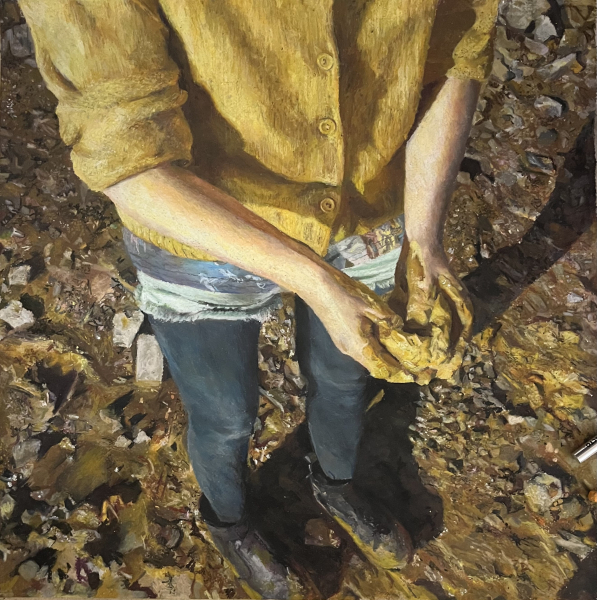
Girl with mud depicts pure engagement with the natural world which many children experience before they internalize social norms and expectations.
Dots count
1
1
Julia Karp
(@jnk3)
Dec 25 2025
0.34
0.32
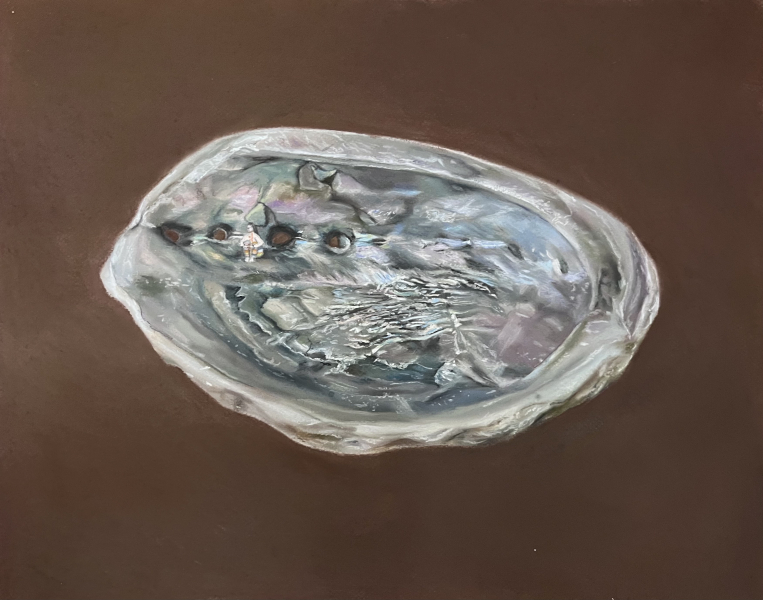
Shell Dweller is intended to test the viewer's own presence and attention. At first glance, the viewer may see only a shell, and be tempted to move on to the next artwork. But if the viewer lingers, they will eventually notice the shell dweller in the upper left region of the shell: hopefully an amusing and gratifying reward. The shell dweller ignores the iridescence and magic of the shell, and instead stares into a dull brown void. This is intended to serve as a metaphor for a lack of patience, and disconnection from the natural world—a departure from the natural presence of childhood.
Dots count
1
1
Julia Karp
(@jnk3)
Dec 25 2025
0.45
1.02
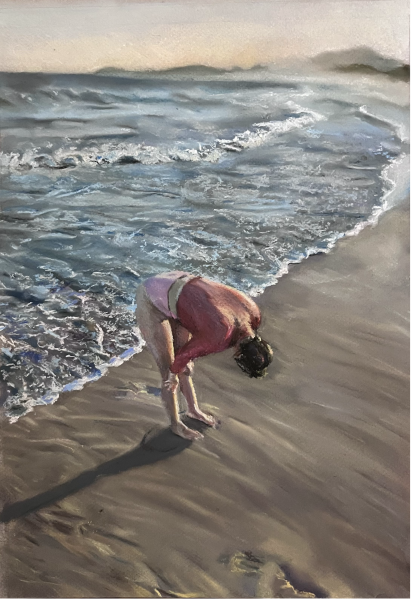
Bending Beach is meant to remind the viewer of the transcendent sensations that can be found in the natural world. As the surf recedes, the subject of the chalk pastel experiences a vortex of suctioned sand beneath her feet. She is fully absorbed in the sensation. The woman's face is not visible, to represent how her experience is private and fully her own, representing a return to the presence found in childhood.
Dots count
1
1
Julia Karp
(@jnk3)
Dec 25 2025
0.53
0.35
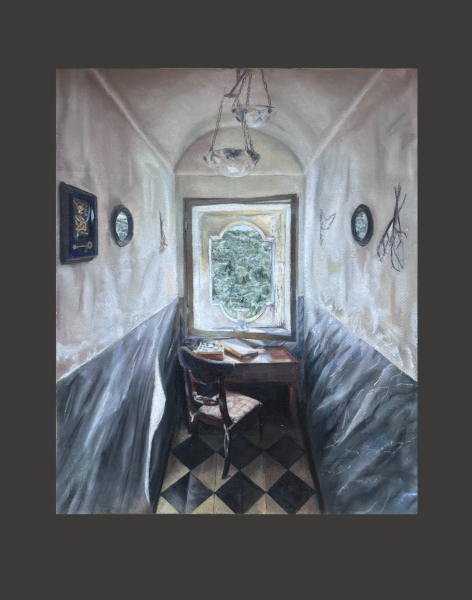
Thought Pattern captures how the fight for presence is ultimately a mental one. The stone room is cold, unforgiving, and claustrophobic, but the view of a hillside through the window serves as relief. The light is a scale, representing the battle between presence and self-absorption.
1
2
1
1
1
Exhibit ID:756
0
0
5
4
5
On Seeing and Being Seen in the Natural World
For the 2026 Williams Art Community Project (WACP).
My exhibition explores the losses that can come with being highly perceived, and being highly reliant on others’ perceptions of oneself throughout life. Inspired by the 19th century French concept of a flâneur—an urban wanderer and observer—I aim to draw attention to the zero-sum relationship between seeing and being seen. When we invest effort into how we are seen, less may remain for presence, attention, and energy to observe the world around us. The term “flâneur” was originally a descriptor for men, since French urban women in the 19th century faced stricter social expectations in public and had less access to public spaces. Thus, it was difficult for them to become fully absorbed in their surroundings. My work explores the unattainability of being an American flâneuse—a female flâneur—in the modern day due to the persisting scrutiny women experience in society. Through natural subjects and landscapes, depict how social pressures change women's ability to observe and notice details in the natural world. I hope to provoke consideration of how perception shapes not just how women are seen, but what they are able to see in return.